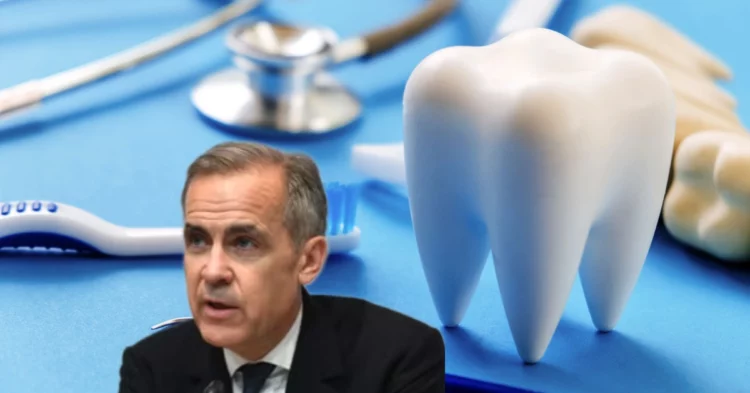
The CDCP is a federal benefit program aimed at making dental care more affordable for Canadians who don’t have private dental insurance. It expands access to oral health services by subsidizing part or all of the costs, based on your household income, and ensuring many essential services are available. The plan is administered by Health Canada, with Sun Life handling benefit management.
Who Gets the $680 CRA One-Time Payment in September 2025? Full Breakdown
Confirmed $808 OAS + $1,097 GIS Payment Coming September 25, 2025: What Canadian Seniors Must Know
CRA Confirms Up to $8986 Refund in 2025: Full Eligibility, Application Process, and Benefits
Key Changes & Expansion in 2025
- As of May 2025, all remaining eligible Canadians aged 18 to 64 were invited to apply. Previously only certain cohorts — like children, seniors, and people with a Disability Tax Credit certificate — were covered. Coverage under the new expansion began June 1, 2025.
- Annual renewal is required: existing members must file their 2024 tax return and submit renewal applications by June 1, 2025, to ensure no interruption. Coverage ends on June 30, 2025 if not renewed.
Who Qualifies for the CDCP in 2025?
To be eligible, you must meet all of the following criteria:
- Adjusted family net income under $90,000 per year.
- No access to private dental insurance (through employer, spouse, pension, or purchased plans).
- Be a Canadian resident for tax purposes.
- Have filed your most recent tax return. Necessary for determining income and eligibility.
What Services Are Covered & What Are Not
Covered Services
The CDCP covers many essential and medically necessary dental services, including:
- Preventive and diagnostic services (e.g. cleanings, exams, X-rays, fluoride)
- Restorative care such as fillings, crowns, partial dentures, root canals, etc.
- Periodontal (gum disease) treatment, oral surgery such as extractions, sedation if required under certain circumstances.
Orthodontic Services
- Starting in 2025, limited orthodontic services are being added, but only in cases of medical necessity, under strict criteria, and with spending limits.
Preauthorization
- Some treatments—especially those beyond certain frequency limits or higher cost, such as crowns, sedation, etc.—require preauthorization before the provider proceeds.
What’s Not Covered
- Cosmetic procedures like teeth whitening, purely aesthetic treatments are excluded.
- Services by providers who are not participating in the CDCP.
How Much You’ll Pay / Co-Payments
How much CDCP pays vs. what you pay depends on your adjusted family net income:
| Adjusted Family Net Income | Amount CDCP Covers | Your Co-Payment* |
|---|---|---|
| Less than $70,000 | 100% of eligible CDCP rates | 0% (you pay only applicable fees outside CDCP) |
| $70,000-79,999 | 60% | 40% co-payment of CDCP-established fees |
| $80,000-89,999 | 40% | 60% co-payment of CDCP fees |
* Note: “CDCP-established fees” may be lower than what some dentists charge; any variance above those fees may need to be covered by the patient.
How to Apply / Renewal & When Coverage Begins
- Application for new eligibility or renewal is done via the Canada.ca website, through your My Service Canada Account, or by phone.
- If you are already on the plan, renew by June 1, 2025 to avoid gaps.
- Coverage under the renewed or new application starts depending on date of enrolment; new eligibility opened in cohorts starting June 1, 2025 for different age groups.
What This Means for You
- If you don’t have private dental insurance, and your family income is under $90,000, you’re likely eligible.
- If your income is under $70,000, many services will be fully covered under CDCP-rate.
- If your income is between $70,000 and $90,000, expect to pay some portion (40-60%) for covered services.
- Always check whether your dentist participates—if they don’t, the benefit may not apply.
The CDCP is a major move toward making dental care more accessible and affordable for a large number of Canadians. With the 2025 expansion to all eligible 18-to-64-year-olds and clarified co-payment scales, many who delayed treatment due to cost may now find it easier to address dental health.
If this applies to you, make sure you’ve filed your tax return, check your eligibility, renew if needed, and schedule needed dental work. It could save you hundreds—or more—while helping protect your health.